 SGS Certification –Singapore Changi Airport Aluminum Ceiling Supplier
 S1 Clip-in Metal ceiling System
 JMT-L4.2 U-Baffle System
 JMT Aluminum Wall Cladding
 Aluminum Honeycomb Panel
 Air-Condenser Cover
 Metal Heat Cover
 Singapore Changi Airport T2 Arrival
 Australia Marvrl Stadium City Edge
 Enterprise Information Announcement
 Construction Industry Solutions
 About Jayminton
 Contact US
Aluminum Cladding Horizontal Installation Guide

Enjoy the enduring beauty of Jayminton Cladding in the bush, by the beach or in full sun. Effortless to install and maintain,Jayminton Cladding is the ultimate in exterior cladding. The following installation guide outlines a range of installation techniques. If you require further assistance, please contact us.
Horizontal Applications
1. Apply Sarking or Building Wrap and Any Additional Battens or Noggins Required
When installing battens for a horizontal cladding facade, position the battens vertically with a spacing of 600mm between centres.
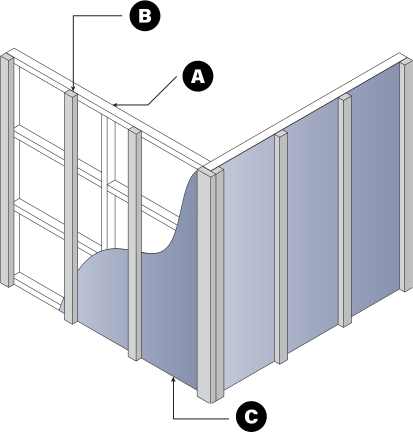
| Label | Description |
| A | Frame |
| B | Battens/ Thermal Break (if required) Ensure frame can provide fixings for every 600mm (may need to alter the frame to satisfy needs). |
| C | Sarking/ Building Wrap |
2. Cover Strip Setup
a) Install cladding accessories including End Cover Channels, 20×20 Angles, Joining Connectors, 20×20 Tee Sections and Internal or External Corners. When installing ensure all extrusions are fixed at maximum 600mm centres or as required for the applicable wind loads.
b) Measure and cut horizontal cladding accessories to length including Starter Strip and Cover Strip Base.
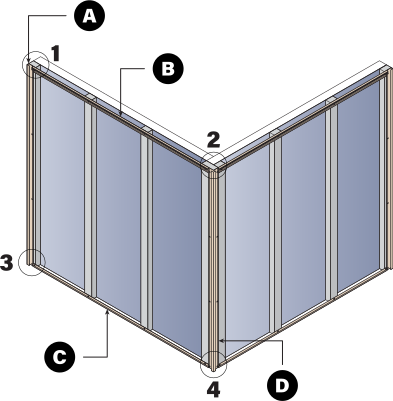
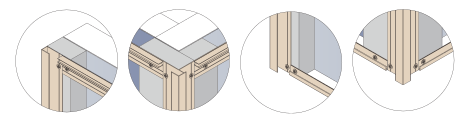
| Label | Description |
| A | End Cover Channel |
| B | Cover Strip Base |
| C | Starter Strip |
| D | External Corner |
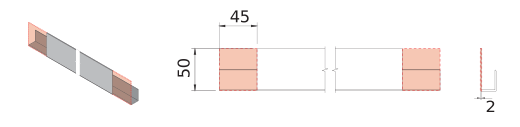
NOTCHING DETAIL FOR STARTER STRIP
Notching a starter strip is only necessary if the cladding is visible from the underside. Refer to the diagram below to notch the starter strip as illustrated, ensuring full coverage on the bottom face.
NOTE: Areas highlighted red are to be notched.
3. Install First Board
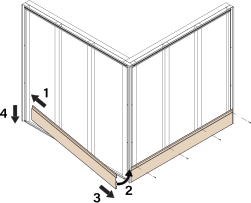
Measure, cut and install first board by positioning lip over the starter strip and fix board using 30mm 10G screws as required for your application. To ensure that the board has the required movement, the fixings are required to be installed through the pre-punched slots. Failure to do so may result in excessive stress and failure of the fixing.
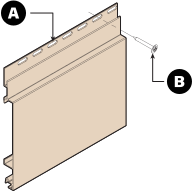
| Label | Description |
| A | Pre-punched slot |
| B | 30mm x 10G Self Tapping Panhead or Button head screws (galvanised or stainless steel) |
Cutting Tip
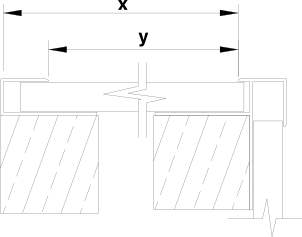
When cutting the boards to length, one method of ensuring that you have adequate coverage is to measure the distance available in the internal dimension of the End Cover Channel to the end of the cover at the other end and subtract 5mm. (See diagram)
Length of Board = x – 5mm
Length of Cover Strip = y – 2mm
4. Install Next Board and Repeat Until Final Board
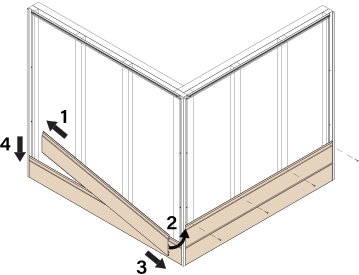
Install the next board by positioning lip over the positioning leg on the previous board and fix board using 30mm 10G screws as required for the applicable wind loads. Ensure that the fixings are installed through the pre-punched slots.
TIP: After every 5th board, measure vertically from both ends of the cladding to ensure consistent length. Adjust the angle of the sixth board if needed for levelness, then proceed with fixing each subsequent board to maintain a level surface.
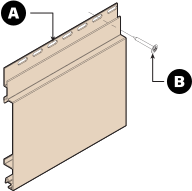
| Label | Description |
| A | Pre-punched slot |
| B | 30mm x 10G Self Tapping Panhead or Button Head screws (galvanised or stainless steel) |
5. Rip and Install Final Board
The final cladding board might not be the right fit, so it needs to be ripped with a table saw. Measure the remaining space and cut the board accordingly for a proper fit.
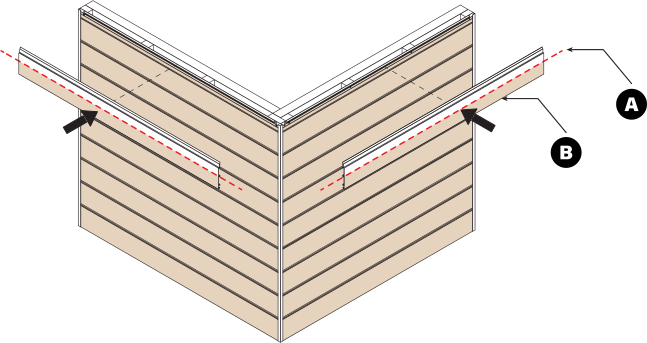
| Label | Description |
| A | Cutting Line (if required) |
| B | Final Cladding Board |
6. Cut and Install Cover Strips
Measure horizontal Cover Strip Clip between the external face of the vertical members (see cutting tip in Step 3), cut to
length and snap in to fit.
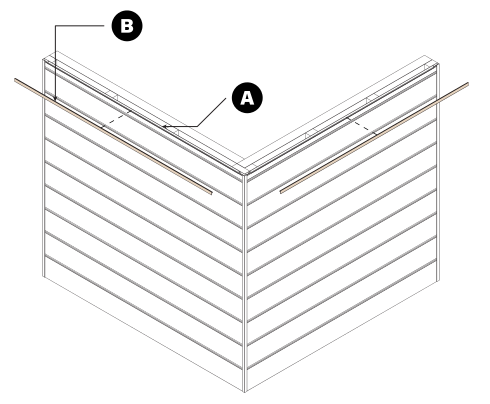
| Label | Description |
| A | Cover Strip Base |
| B | Cover Strip Clip |
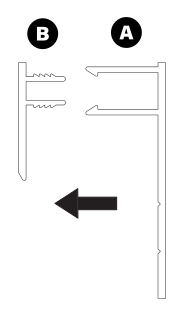
| Label | Description |
| A | Cover Strip Base |
| B | Cover Strip Clip |